
FALCON Software Suite
Client
Confidential (Government/ Defense)
Sector
Defense & Government — Integrated Logistics Support
Location
Not disclosed
Services Provided
Design & Development (Software Platform), Consultancy & Architecture, Data Migration & Modernization
The Challenge
A Legacy System That Couldn't Keep Up
The organization’s existing data was spread across an obsolete database structure, with technical manuals, Illustrated Parts Catalogues, and equipment drawings held in disconnected formats rather than a standardized system. There was no reliable way to get part-level configuration data quickly, no automated way to plan and record maintenance routines across shipboard machinery and equipment, and no digital, structured record of the technical documentation needed to support day-to-day maintenance decisions.
The Approach
A Modular Platform Built Around ILS Standards
We built FALCON, a modular Integrated Logistics Support platform, and tailored it specifically to this organization's fleet-management needs — covering configuration management, maintenance planning, and reporting from one connected database.
RFQ Creation & Supplier-Side Experience
Fifteen independent, interoperable modules built on an LSAR/LPD-centric database, so data entered once is standardized and usable across every module. Web-based and cross-platform with no installation required, single sign-on across all modules, and five layers of role-based permission control.
Migration From Legacy Data
Bringing the organization's existing fleet data onto FALCON followed a structured process: asset selection, an onboard survey, and a full Ship Fit Definition covering all installed equipment, followed by extraction and analysis of the existing database structure alongside all available technical manuals, IPCs, and drawings — before converting everything into FALCON's standardized format.
Tailored Modules: Maintenance, Configuration, Reporting
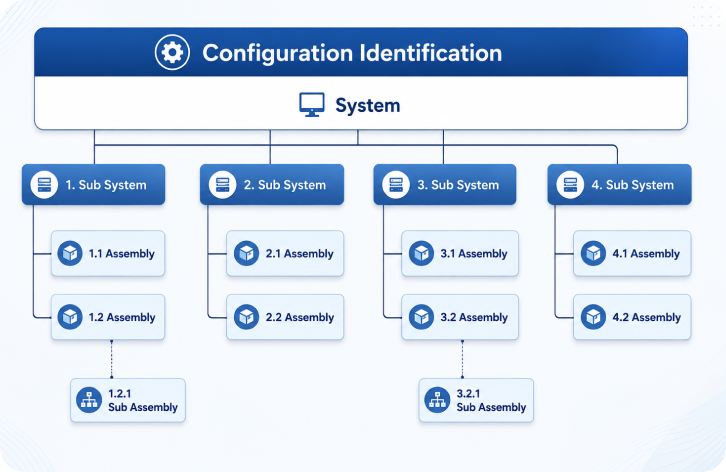
Three modules were tailored specifically for this project: a Maintenance Planner and Scheduler for preventive and corrective maintenance tasks; Configuration Management fusing OEM and integrator data down to part level, using the US ESWBS coding standard; and a Reporting module giving higher command and ship staff visibility into maintenance history, planned maintenance requirements, and part-level reliability prediction.
The Outcome
A Platform Built for the Full Asset Lifecycle
The organization now runs configuration management, maintenance planning, and technical reporting for its fleet from a single connected platform — replacing a fragmented legacy setup with part-level configuration data, automated maintenance recording, and structured technical documentation in one place.
No email back-and-forth
Suppliers respond directly through the platform — requests, quotes, approvals, all in one place.
Side-by-side comparison
Price, quantity, and delivery terms compared at a glance
AI-matched from the start
Incoming RFQs get a first-pass supplier match before anyone reviews them manually.
PO in one click
Purchase orders generate directly from an approved RFQ.